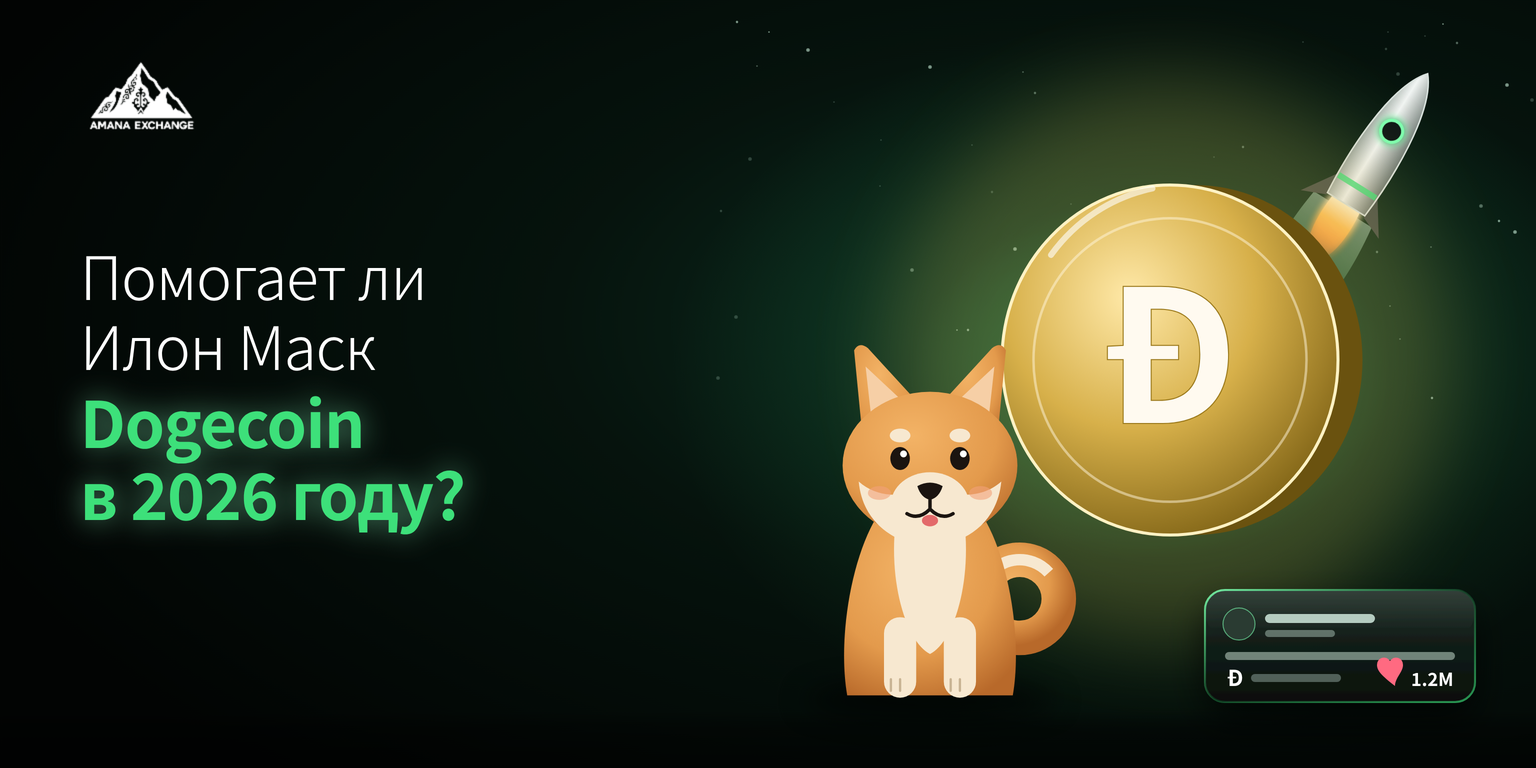
Two camps are still arguing over DOGE. Some see it as “Musk’s coin”, about to become a means of payment on the platform formerly known as Twitter and for Tesla and SpaceX. Others wrote it off long ago as a dead meme. In this article, we test both views against 2026 data: issuance, social metrics, spot ETF flows and actual integrations with Musk’s companies.
How DOGE slipped from 4th place to just outside the top 10
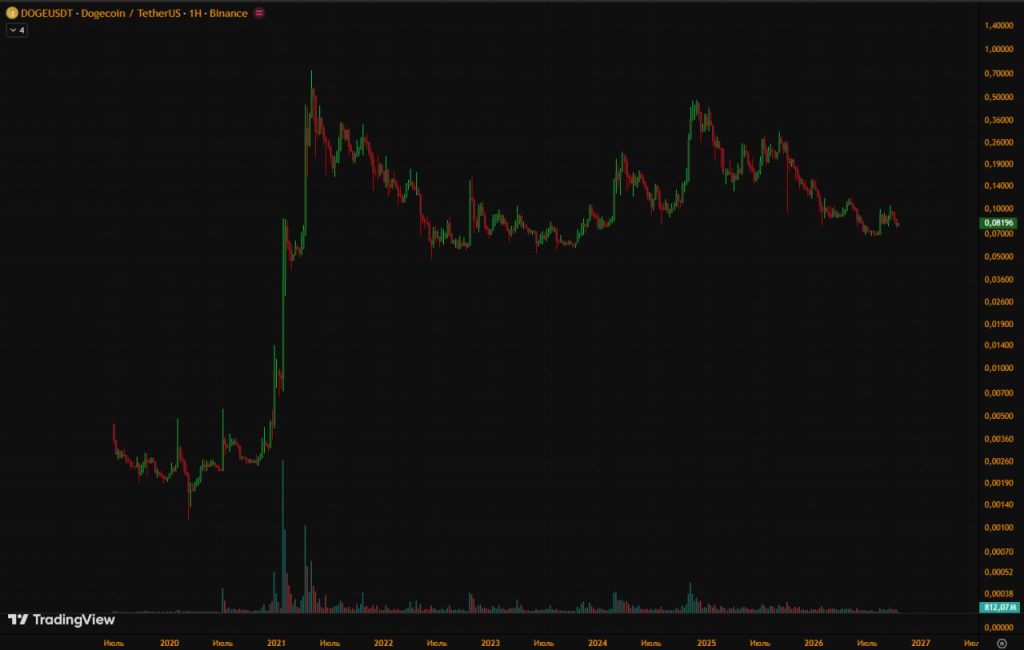
In May 2021, DOGE climbed to 4th place by market cap on a wave of Elon Musk’s tweets and his appearance on Saturday Night Live. The market seriously discussed the token as a contender for the top 3 among all cryptocurrencies, after bitcoin and ether, and its valuation at the time exceeded the market caps of 385 S&P 500 companies.
📊 In October 2026, DOGE trades at around $0.08 with a market cap of about $12.4 billion and ranks 11th–12th. It remains the largest memecoin, but no longer contends for the top.
👉 Social media interest and trading volumes have shrunk several times over since 2021. Four angles show how it still holds its position and what role Musk plays: issuance, social metrics, Musk’s projects and ETF flows.
How many new coins the market has to absorb each year
DOGE runs on Proof-of-Work: miners create new blocks and are rewarded with newly issued coins. Issuance is fixed and perpetual, about 5 billion DOGE a year, and there is no maximum supply. In percentage terms, inflation declines as the base grows, but in absolute terms the same number of coins is added every year.
👆 At around $0.08, the market needs to absorb about $0.4 billion in new coins every year just to keep the price flat. Miners sell a significant share of their output to cover costs, which creates constant selling pressure. For BTC, this pressure eases with each halving, when the miner reward is cut in half, but for DOGE it stays the same.
Coin concentration looks alarming at first glance. The top 10 addresses hold about 44% of coins, and the top 100 about 66%. However, many of the largest addresses belong to exchanges and custodians holding client assets. The biggest is Robinhood’s cold wallet with about 27 billion DOGE, backed by many clients’ money, not a single whale. Still, a risk remains, because one platform’s decision can move a huge volume of coins.
How much interest in DOGE has cooled since 2021
📈 In 2021, DOGE was one of the internet’s hottest topics. In April that year, its social volume, the number of mentions and discussions on social media, rose more than 300%. Daily trading volumes reached $20 billion and above.
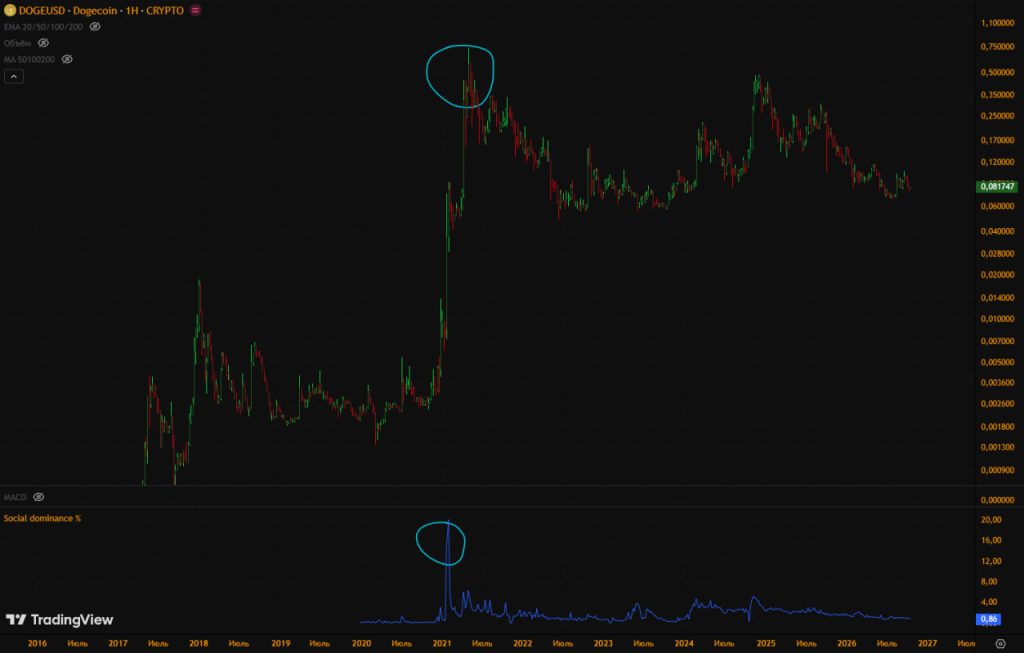
In 2026, spikes have become short and weak. By mid-March, DOGE mentions fell 28%, according to Santiment. The ETF hype in January gave only about a 25% boost, and the effect faded within a few weeks. DOGE now ranks 10th among crypto assets by mentions: it’s visible in discussions but no longer leads.
Trading volumes have fallen roughly 30x from 2021 peaks, while market cap declined only 6–7x over the same period. It seems the speculative inflow has left, but most holders never sold.
What from the “Musk ecosystem” has actually materialized
In 2021, Musk announced that SpaceX would send Dogecoin to the Moon, and DOGE jumped 32% within minutes. Even then the effect proved short-lived: within 48 hours, the token lost 35%.
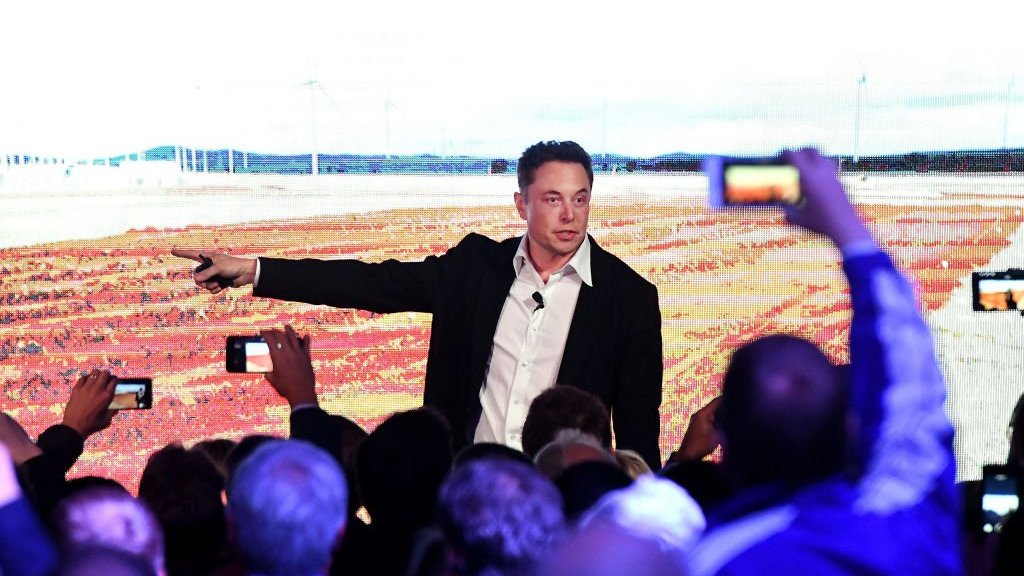
In 2026, the market shifted from tweets to products. The X Money announcement in March lifted DOGE almost 8%, to $0.10. However, on June 25, the service launched without crypto, offering P2P transfers, a Visa card and 6% APY. X had been obtaining money transmitter licenses in dozens of states, and a volatile memecoin would likely have complicated that process.
On the day of the SpaceX IPO, the largest in history, DOGE rose 2.3%, in line with the market. The DOGE-1 satellite, funded in DOGE, was supposed to launch on September 14, but the main IM-3 mission was postponed to early 2027. So far, only one integration actually works: since 2022, Tesla has accepted DOGE for merch. News still triggers price spikes, but no longer creates sustained investor demand.
Why digital commodity status and ETFs didn’t bring DOGE money
Formally, DOGE has “grown up”: on March 17, 2026, the SEC and CFTC jointly classified it as a digital commodity, in the same category as BTC and ETH. In the US, the spot funds DOJE, GDOG, BWOW and TDOG operate, holding the coins themselves on their balance sheets.
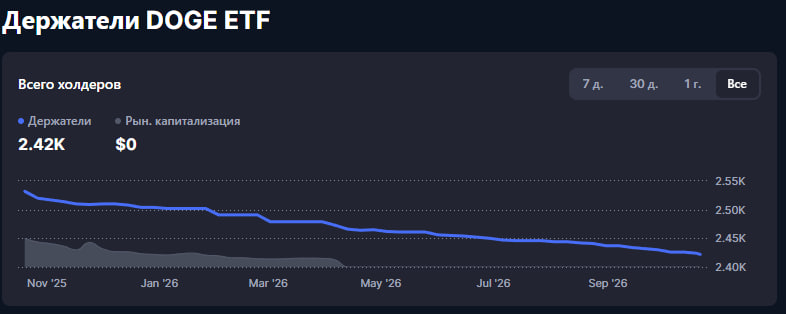
Demand for them turned out modest. GDOG posted $1.4 million in first-day volume, even though a Bloomberg analyst had forecast up to $12 million. Bitwise is closing BWOW with about $722,000 in assets: trading ended on October 14, and payouts will be made on October 22. For comparison, XRP funds drew $11.3 million in a single week — about three-quarters of what DOGE ETFs have raised since launch.
🐳 The corporate treasury didn’t hold up either. CleanCore, together with House of Doge, raised an “official Dogecoin treasury” worth $175 million to hold a reserve of coins on the company’s balance sheet, and by November 2025 had accumulated more than 733.1 million DOGE. Later, the company sold 463 million DOGE at ~$0.072, raising $33.4 million, and redirected the funds to a pivot into AI infrastructure.
📊 By our calculation, all DOGE ETFs together drew about $15.6 million over the year. That’s less than 4% of the ~$0.4 billion in new supply added by issuance each year.
What keeps DOGE in the top dozen and what it risks
Drivers:
▪️The DOGE brand is recognized even by people far removed from crypto.
▪️The token trades on almost every exchange and broker, including Robinhood, so liquidity remains high.
▪️Legacy holders who bought in previous cycles don’t sell on dips.
▪️The market still prices in the chance of a new integration with Musk’s companies.
Risks:
▪️Perpetual issuance adds supply without growing demand.
▪️Large volumes of coins are concentrated on custodial addresses.
▪️The price depends on one person’s actions and statements.
▪️DOGE has no fundamental value in the classic sense: no revenue, no fees for holders, no staking.
DOGE holds its place near the top of the rankings through inertia: a recognizable brand, liquidity and holders who don’t sell. Musk can still pump the price with a big headline, but neither his products nor ETFs have brought in new money, while issuance adds supply to the market every year.