A stablecoin is a token whose price is pegged 1:1 to the dollar, unlike BTC or ETH, whose price can swing by tens of percent in a single week.
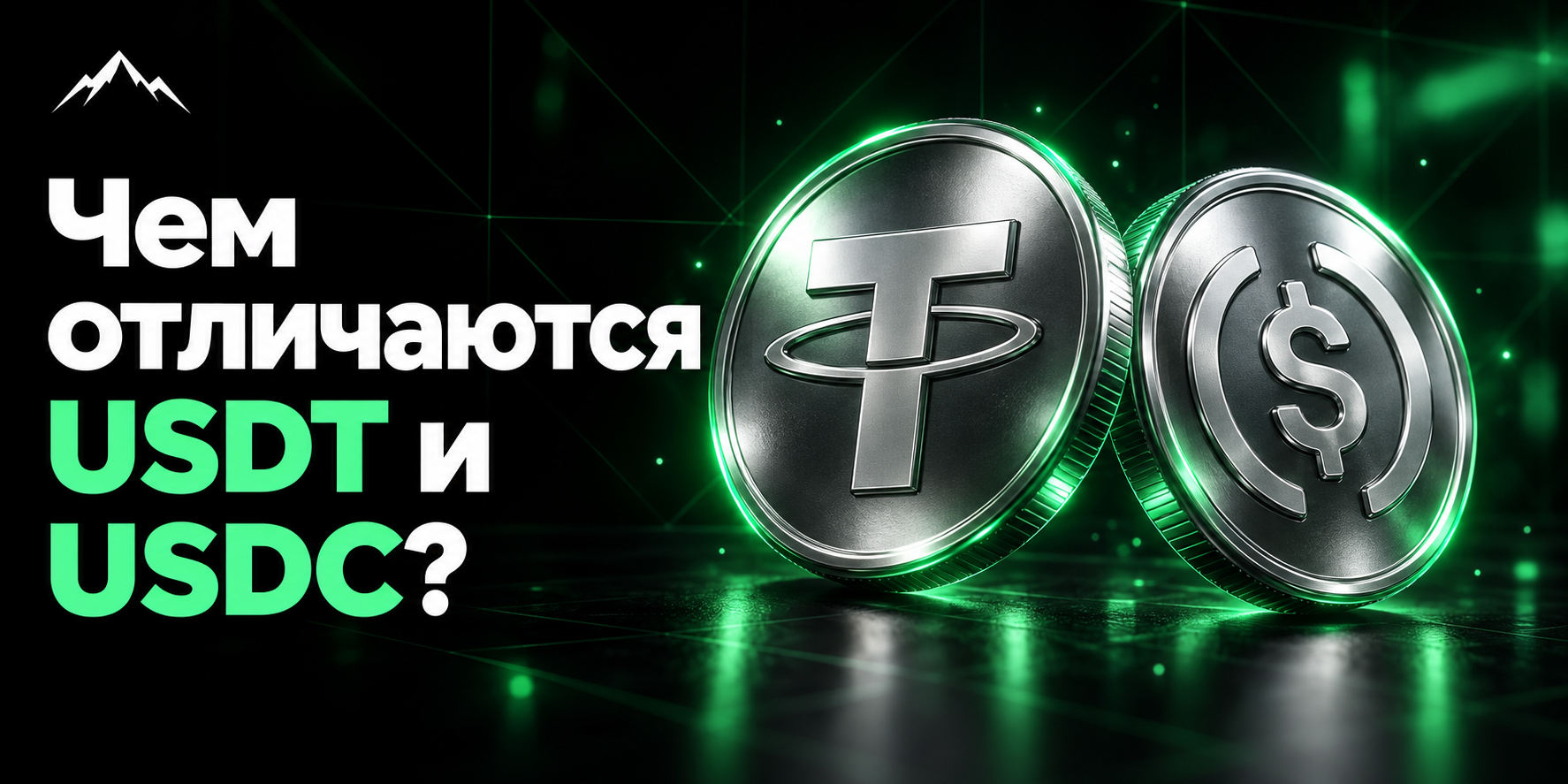
USDT (Tether) is the first and largest stablecoin by market cap, with USDC (Circle) in second place. Both tokens don’t run on a single network — they exist across several blockchains at once, including Ethereum, Tron, Solana, and others — and this is what determines how much a transfer will cost and how fast it will go.
👀 In practice, a stablecoin solves three tasks:
▪️ A trader moves funds into it from a volatile asset without cashing out through a bank
▪️ An exchange uses it as a settlement unit for trading pairs instead of the dollar
▪️ A user transfers money between wallets or countries faster and cheaper than through a bank transfer
USDT and USDC aren’t competing “coins” in the usual sense — they’re two different commercial products with the same function. The difference between them lies in who issues them and how the system works under the hood.
Who Issues USDT and USDC, and Why Does It Affect Trust?
USDT is backed by Tether — an offshore company that discloses its reserve status through quarterly attestations from independent auditors, rather than a full audit. In early 2026, Tether announced a move toward a full audit, but as of mid-year it still hasn’t been completed. In 2021, the company paid the U.S. Commodity Futures Trading Commission (CFTC) a $41 million fine for making misleading claims about USDT being 100% backed by dollars in 2016–2019 — part of the reserves during that period were unverified, even though the company claimed otherwise. ⚠️
Circle, which issues USDC, is registered in the U.S. and publishes monthly reserve reports from independent auditors. The company is also adapting its product to the EU’s MiCA regulation, which expands USDC’s legal access to European markets.
The difference shows up in both approach and market cap. USDT holds around $184 billion (≈59% of the stablecoin market), while USDC holds around $79 billion (≈24%) — USDT is roughly 2.3 times larger. This is also reflected in reserve composition. Tether holds a diversified portfolio: U.S. Treasury bonds, gold, and a portion of commercial paper. Circle’s reserves consist mainly of cash and short-term U.S. Treasury bonds, managed by BlackRock.
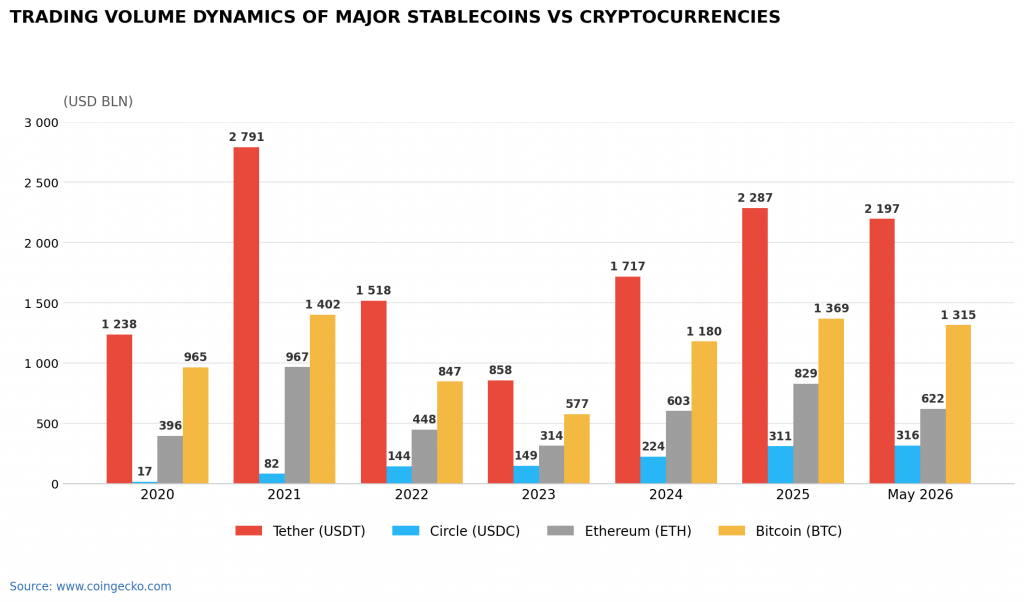
What emerges is a division of roles, not a question of “who’s more honest.” Size and liquidity favor USDT, while transparency and regulatory predictability favor USDC. These are two different business models, and which one matters more depends on what the reader plans to do with the token next.
How Do USDT and USDC Differ Technically, and What Does This Mean for Transfers and Storage?
Both tokens are issued not on one network, but on several at once. USDT runs on Tron (TRC20 standard), Ethereum (ERC20), BNB Chain (BEP20), Solana, TON, and a number of other networks. USDC is available on Ethereum, Base, Solana, Polygon, and other networks. 😅 At first glance this looks like a detail for tech people, but it’s exactly where most beginner mistakes happen.
The same “balance” of USDT on different networks is, technically, different tokens, issued under different standards on different infrastructure. A TRC20 address and an ERC20 address look similar but are not compatible with each other: sending TRC20 tokens to an address expecting ERC20 results in loss of funds — the network won’t recognize the transaction as valid. Always double-check the sender’s and recipient’s network before transferring, not just the coin’s ticker. ⚠️
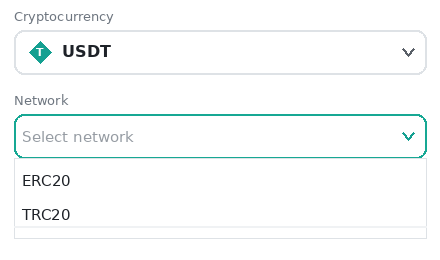
💰 Transfer fees depend primarily on the network, not on whether it’s USDT or USDC: ▪️ On Tron (TRC20), a typical fee is around $1, and can drop to near zero if you hold staked TRX on the network ▪️ On Ethereum (ERC20), fees range from $2 to $10 during calm periods and can rise above $20 when the network is congested ▪️ On Solana and TON, a transfer costs a fraction of a cent and confirms almost instantly — in seconds, not minutes
The difference in network preferences developed historically. USDT became entrenched in Tron thanks to low fees: about half of all USDT issuance is currently on this network, and Tron remains the primary channel for small P2P transfers and exchange withdrawals. USDC is more tightly integrated with Ethereum and Base — there it serves as the main settlement unit in DeFi protocols like Uniswap and Aave, where smart-contract compatibility matters more than low fees.
This gives us an algorithm for beginners:
▪️ First, find out which networks the recipient accepts — a specific person, an exchange, or a service: this constraint shapes the entire rest of the choice, because it’s physically impossible to send a token to a network the recipient doesn’t support
▪️ Then compare the cost of transferring on that specific network: if the recipient accepts both the TRC20 and ERC20 versions of the coin you need, choose TRC20 or Solana to save on fees
▪️ Only last, consider whether it’s USDT or USDC: given the same network conditions, the difference in transfer convenience between the coins themselves is minimal
What looks like “a technical difference between USDT and USDC” is, in reality, 80% a difference between the networks these tokens are issued on. The coin itself is a secondary factor; the primary one is which network the other party to the transfer supports.
Which Stablecoin Is Safer to Hold, and What Should You Look At When Choosing?
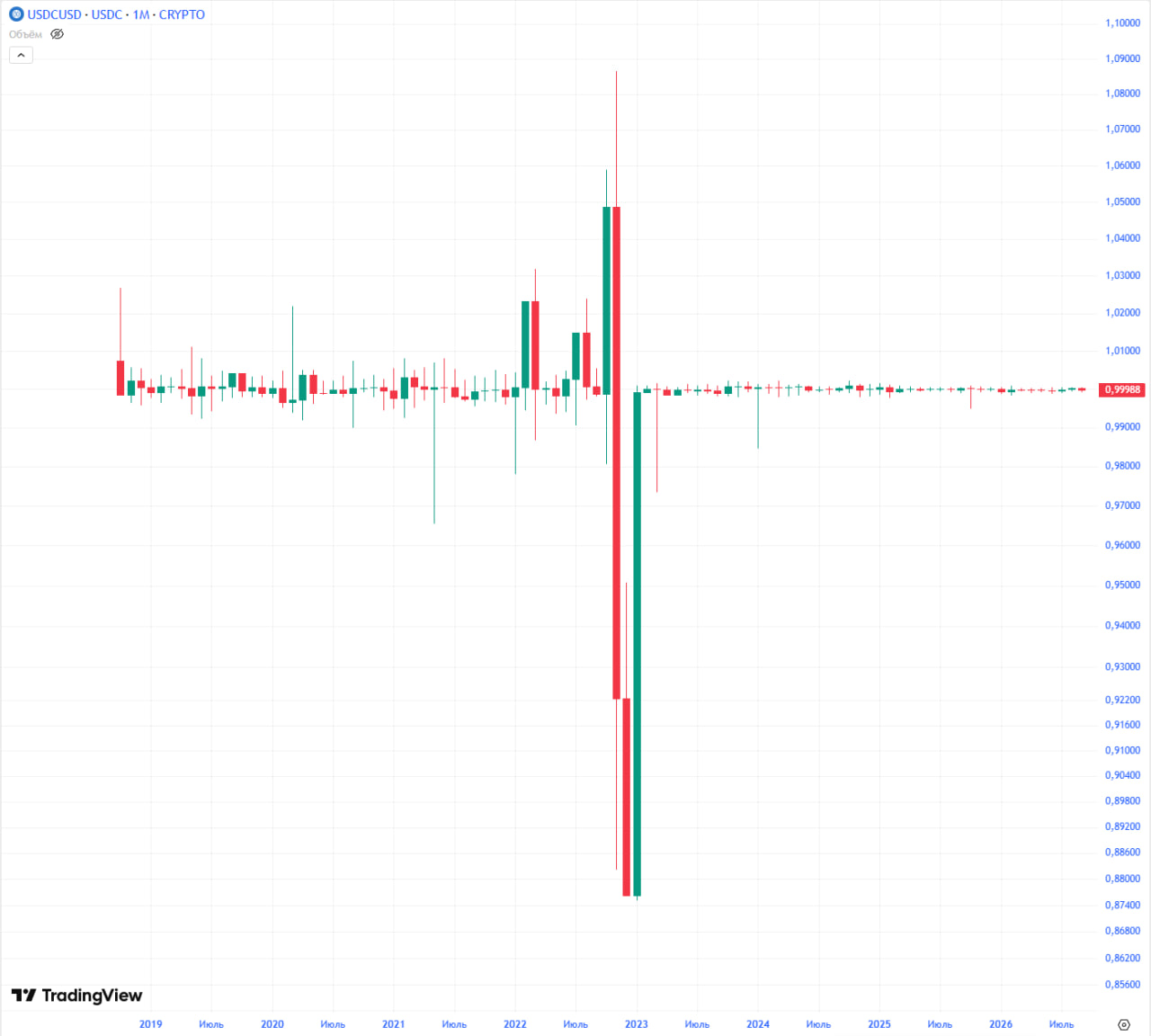
“Safer” isn’t an absolute characteristic — each of the two tokens carries its own type of risk. For USDT, it’s the risk of reserve opacity and the issuer’s offshore jurisdiction. For USDC, it’s the risk of dependence on the U.S. banking system: in March 2023, USDC briefly lost its dollar peg due to problems at Silicon Valley Bank, where part of Circle’s reserves were held. The peg was restored within a few days, but the episode showed that regulatory transparency doesn’t eliminate infrastructure risk.
Both issuers are able to freeze or block addresses at a regulator’s request — this isn’t a hypothetical threat, but a function built into both tokens’ contracts that has already been used in practice.
💡 For a beginner, the main rule looks like this: ▪️ For active trading and fast transfers between exchanges, USDT is more often chosen — due to lower fees and broader platform coverage ▪️ For long-term storage and working with regulated services — banks, payment providers, institutional platforms — USDC is more often chosen
Don’t keep all your savings in a single stablecoin from a single issuer. This isn’t insurance against volatility — stablecoins barely have any volatility to begin with — but diversification of issuer risk: if one company runs into problems with reserves or regulators, part of your funds stays outside the blast radius.
How to Buy or Exchange USDT and USDC on Amana Exchange
Both stablecoins are available for exchange into fiat on most exchangers and P2P services — at the buying or selling stage, choosing a specific coin is almost never a problem.
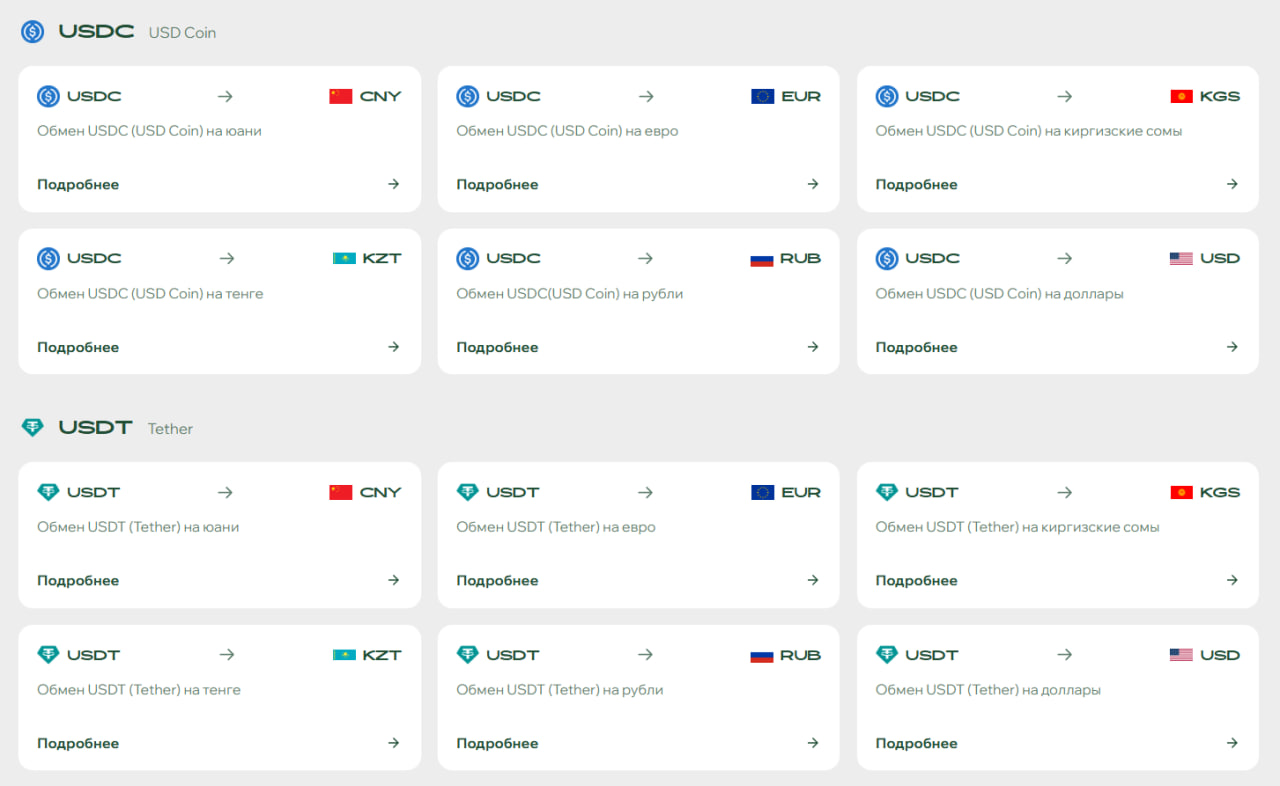
On Amana Exchange, you can buy and sell both USDT and USDC directly for traditional currency — CNY, EUR, USD, RUB, KZT, KGS. Both coins work within the same exchange window, so the decision of “which one to take” comes down not to finding a platform, but to the scenario of further use, which is covered in the sections above.
For most everyday tasks, the difference between USDT and USDC at the buying or selling stage isn’t critical. What’s critical is the network the transfer will run on — it determines the fee and the speed — and what the coin is needed for next: a fast transfer, storage, or working with a regulated service. A conscious choice of network will save real money far more noticeably than a choice between USDT and USDC.