Why these three coins
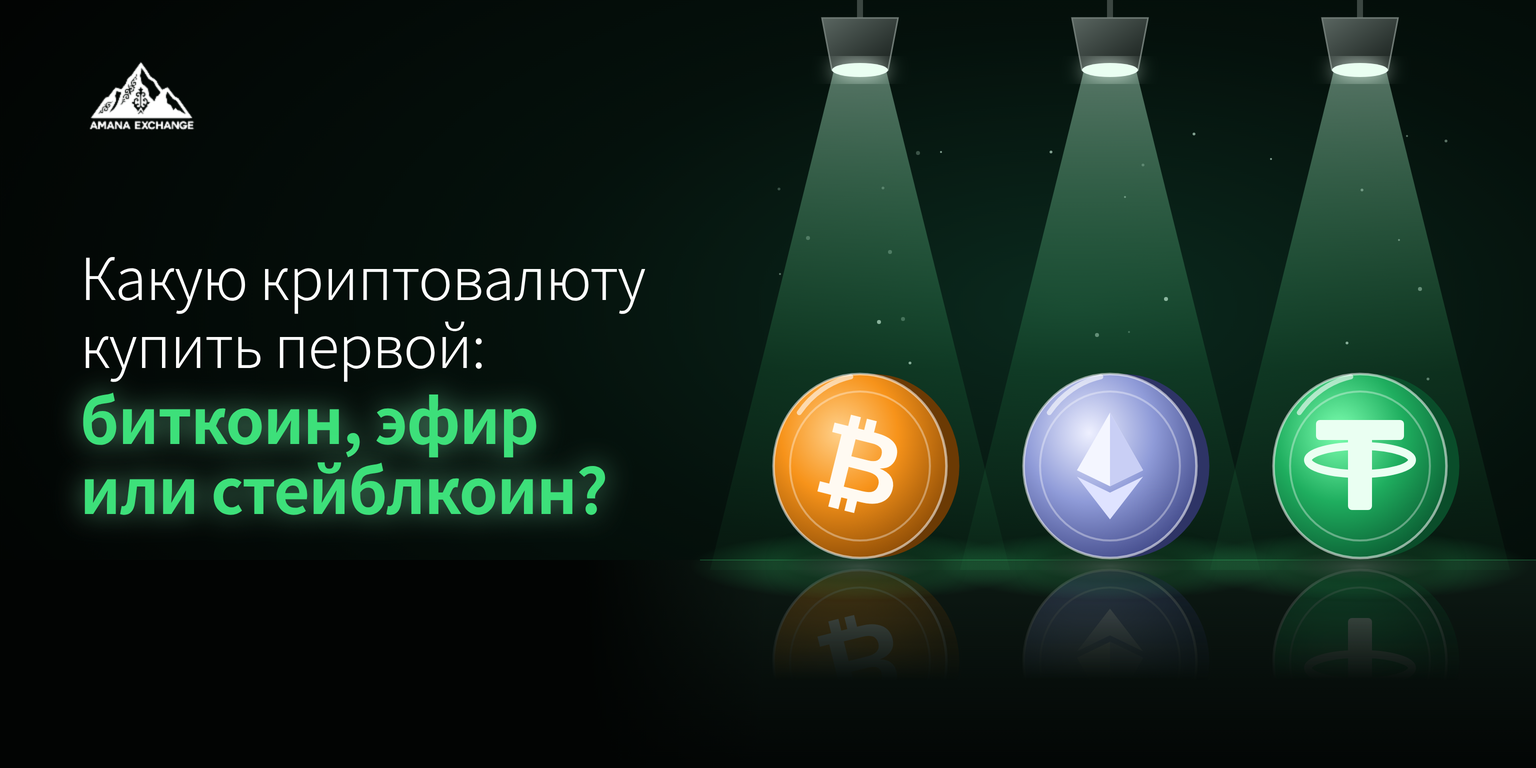
Bitcoin, ether and stablecoins serve different purposes: long-term storage, access to apps and settlement in dollars. They are also the largest assets on the market with the highest liquidity. This makes them easier to buy and sell without big losses on the spread, the difference between the buy and sell price. Small and “trendy” tokens are trickier: they are more prone to sharp price swings and manipulation.
The Bank of Russia seems to have reached the same conclusion. BTC, ETH and USDT made the list of cryptocurrencies that non-qualified investors will be able to buy. The regulator explained its choice as protection against sharp volatility. A coin’s high price doesn’t stand in the way of getting started. You don’t need to buy a whole bitcoin: exchanges sell fractions of it, so a first purchase can cost as little as $10.
What a bitcoin buyer gets
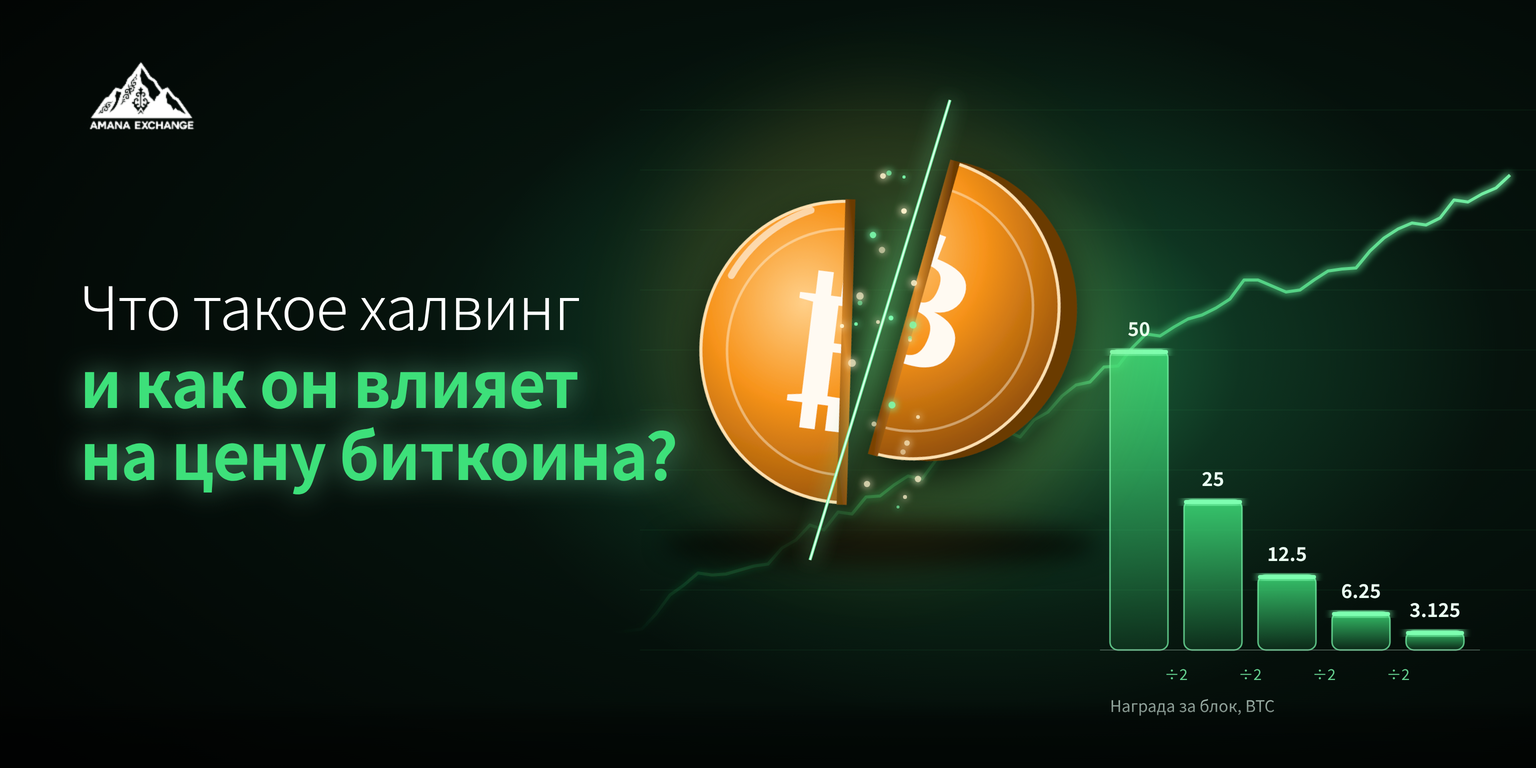
When you buy bitcoin, you get a share of a limited asset that no one issues and no one can print more of. BTC has no issuer, meaning no organization that creates the asset and can change its supply. Issuance is capped by the network’s rules: 21 million coins in total. Neither developers nor governments can change this limit on their own. New coins are created on a predetermined schedule, and roughly every four years their issuance is cut in half. This event is called the halving. Put simply, bitcoin’s supply grows slowly and predictably.
However, a limited supply doesn’t mean a stable price. On October 6, 2025, the leading cryptocurrency rose above $126,000, and on February 6, 2026, it fell to a yearly low of around $60,000. In four months, it lost more than half its value. The price now stands at around $82,000, so it still seems a long way from the previous peak.
The entire market depends on bitcoin’s moves. When it falls or rises, smaller cryptocurrencies usually follow. A beginner only needs to watch one main chart. So BTC suits those who are ready to hold for years and calmly ride out drawdowns of tens of percent.
Why you need ether if you have bitcoin
Bitcoin doesn’t give you access to apps, and that’s exactly what ether is for. Ethereum is the first platform for full-fledged smart contracts, programs on the blockchain that execute automatically when set conditions are met. They power decentralized exchanges, lending services and tokens. Most such apps are still built on Ethereum.
Beginners often confuse ether with the tokens that live on this network. ETH is the native currency used to pay the fee for any transaction. This fee is called gas. Stablecoins on Ethereum, by contrast, are separate tokens that run on top of the network, but transferring them is still paid for in ETH. One figure shows the network’s scale: Ethereum holds about $164 billion in stablecoins, roughly 49% of their total supply. Put simply, almost half of all “digital dollars” live on this network, and every move they make is paid for in ether.
ETH issuance works differently from bitcoin’s: there is no hard supply cap. Ether’s volatility is comparable to bitcoin’s or even higher. In August 2025, ETH set a record at $4,953, and by late December it had fallen almost 40%. The current price is $2,500. That’s why ether suits those who want not just to hold an asset but also to try the network’s apps.
How a stablecoin differs from bitcoin
A stablecoin is a blockchain token whose price is pegged to the US dollar. Technically it’s a cryptocurrency; in practice it’s a digital dollar. USDT and USDC are backed by reserves in cash and cash equivalents, such as short-term US Treasury bills, and the issuer commits to redeem each token for $1. USDT is issued by Tether, USDC by Circle.
This is the key difference from bitcoin. A stablecoin has an issuer, and holders trust it to have enough reserves to cover all redemptions. As of June 12, 2026, the stablecoin market stood at about $316 billion. About 59% belonged to USDT and about 24% to USDC. So the two leaders account for more than 80% of the market.
They are used differently, though. USDT serves mainly for payments and transfers, while USDC is a unit of account in trading. That’s why USDT is more common for transfers. Stability comes at a price: a stablecoin doesn’t grow. It’s designed to hold its peg, so you can’t profit from changes in its price. It’s a tool for storing and moving dollars, not an investment.
How to choose a coin for your goal
Choosing an asset starts with the task. Each goal has its own coin and its own trade-off.
Save. Bitcoin suits savings, and stablecoins suit everyday spending. That said, a long holding period doesn’t rule out drawdowns.
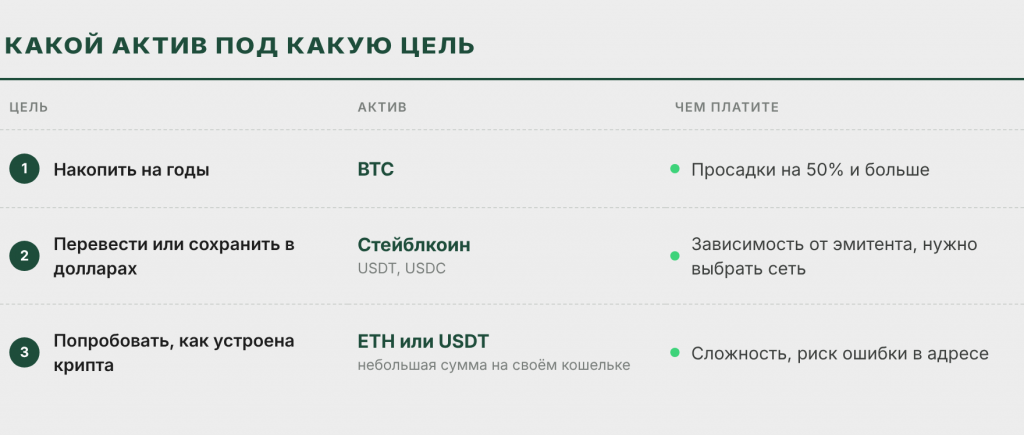
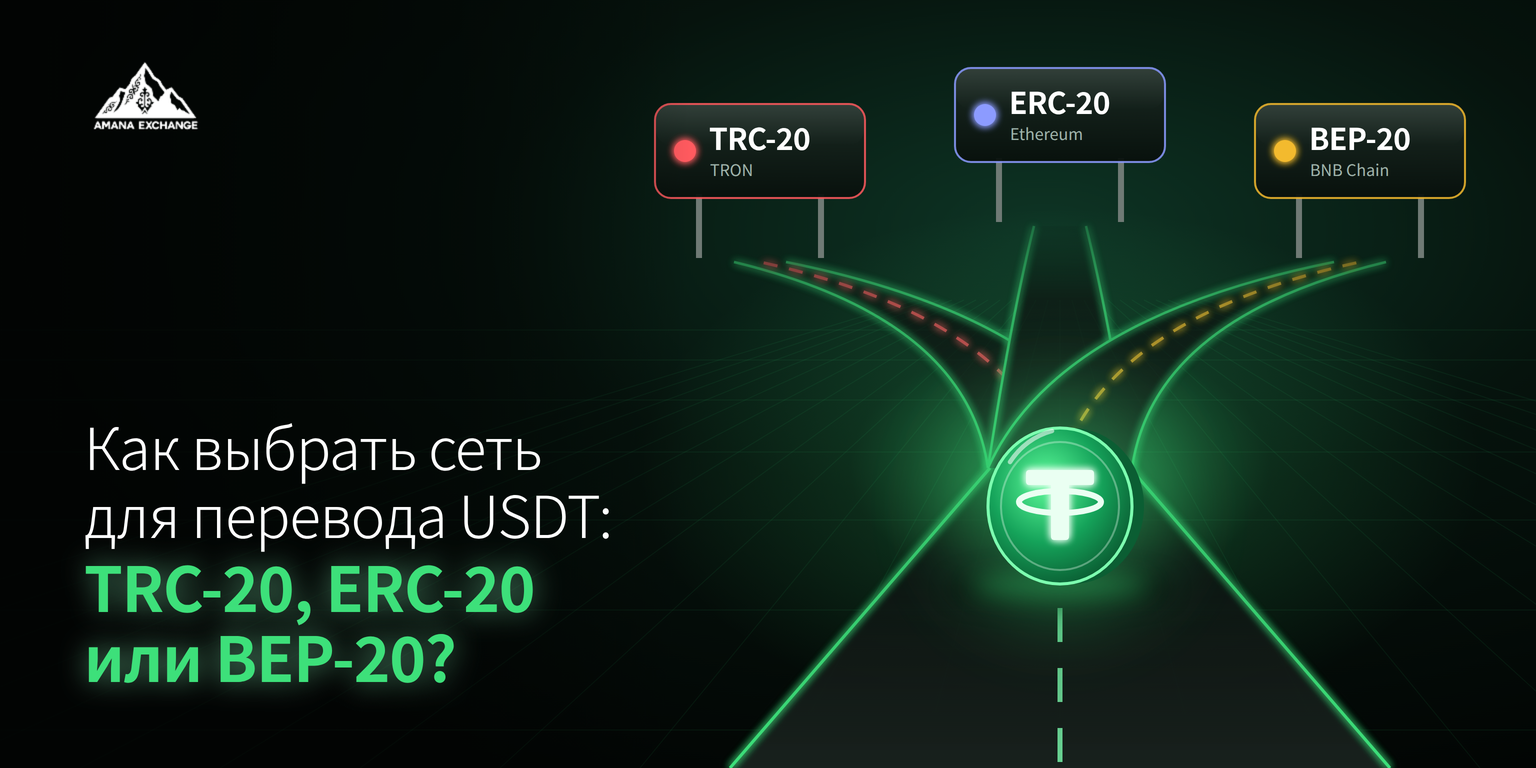
Transfer. The same stablecoin is issued on different networks. You need to send it on the one the recipient specified, or you could lose the funds. USDT’s main network is Tron: transfers there are cheap, so it’s widely used in emerging markets.
Try. A self-custody wallet is one where you hold the keys, not the exchange. A small amount in it gives you practice: sending a transfer, paying gas, connecting to an app. There’s no room for mistakes here: blockchain transactions can’t be reversed, and a wrong address can’t be fixed.
Goals can be combined. Many people hold a stablecoin as an entry point and use it to buy BTC or ETH. Either way, it’s worth first building an emergency fund for regular expenses and only then moving into crypto.
What to consider when buying in Russia and Kyrgyzstan
The rules for a first purchase depend on the country. In Russia, it’s governed by the Digital Currencies Law, while in Kyrgyzstan there are no special purchase limits for individuals.
Russia. The Digital Currencies Law was signed on August 4, 2026, and has been in force since September 1, 2026. From July 1, 2027, transactions will only be possible through licensed intermediaries. Under a draft Central Bank directive, non-qualified investors will be able to buy BTC, ETH and USDT for up to ₽300,000 per year, and all investors must pass a test before buying.
Kyrgyzstan. The country has its own stablecoin, KGST: it’s pegged to the som and issued on BNB Chain. The state-backed dollar stablecoin USDKG, however, was wound down after the UK sanctioned its issuer in May 2026.