Bitcoin has never had an opening bell, weekends, or holidays. Trades happen at three in the morning on a Sunday exactly the same way they do at noon on a Tuesday, and this trait goes almost unnoticed — for a cryptocurrency, it feels self-evident. In 2026, traditional markets started moving toward the same model. Nasdaq introduced an overnight session, the CME shifted crypto derivatives to a 24/7 mode, and the Moscow Exchange extended its main session by an hour.
This piece draws on this year’s exchange decisions and on the work of two authors who wrote about time without pauses: art historian Jonathan Crary and philosopher Byung-Chul Han. The question we’re examining is bigger than a trading schedule.
Is a round-the-clock market simply a convenience for those who trade, or is it a symptom of a broader human shift — one in which a pause stops being a shared norm and becomes a personal decision each of us makes on our own?
Time by the Bell
An exchange has always been a place with its own schedule. Trades were made face-to-face, on a trading floor, and they began with a bell. The closing bell gave time for settlement and clearing, but it meant something more too: it was a moment shared by every participant, when the market simply stopped.
Historian E. P. Thompson described how industrial capitalism restructured the very perception of time. According to Thompson, people once lived by “task-time”: they worked until the job was done. The industrial era brought “clock-time”, which is measured, sold, and spent. The exchange bell grew out of that same discipline. It separated the time of the market from the time of life.
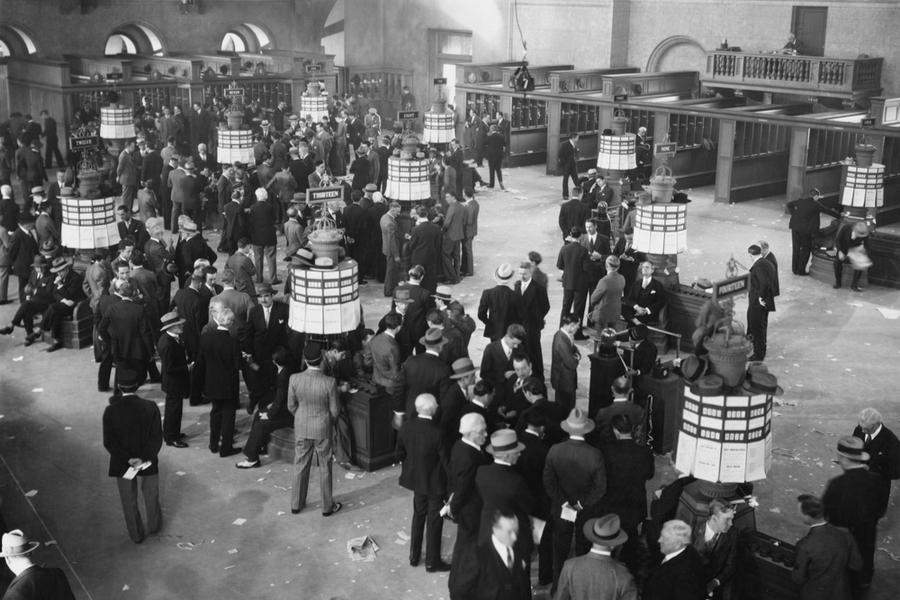
Trading days, meanwhile, gradually shrank. The New York Stock Exchange dropped Saturday sessions in the mid-20th century. Tellingly, back then the market was giving people time back, not taking it away.
The pause also served an economic function. It gave participants time to digest news. It evened out access to information for those who couldn’t monitor prices continuously.
A vestige of this pause survives even now. Between the morning and main sessions on the Moscow Exchange, there’s a one-second break during which orders can’t be placed. Technology is what made it possible to compress that break down to a single second. When computers match orders and settlement happens at the speed of computation, the market no longer needs the hours that people on a trading floor once required. That pause, compressed almost to zero, remains the last boundary before a market where there’s no pause at all.
A Market With No Off Switch
Bitcoin wasn’t designed as an exchange-traded asset. The network has no operator who could declare a day off, and no settlement day. New blocks appear roughly every ten minutes, and the calendar has no effect on that. Its round-the-clock nature is a consequence of its architecture, not anyone’s business decision.
For a coin holder, this is a new kind of situation. The price of the asset in their pocket changes overnight and on Sundays. No external signal tells them it’s okay to stop watching the chart.
At the same time, while the market never sleeps, people still do. In 2018–2021, weekends accounted for roughly a quarter of Bitcoin’s trading volume. By early 2024, that share had fallen to 13%.
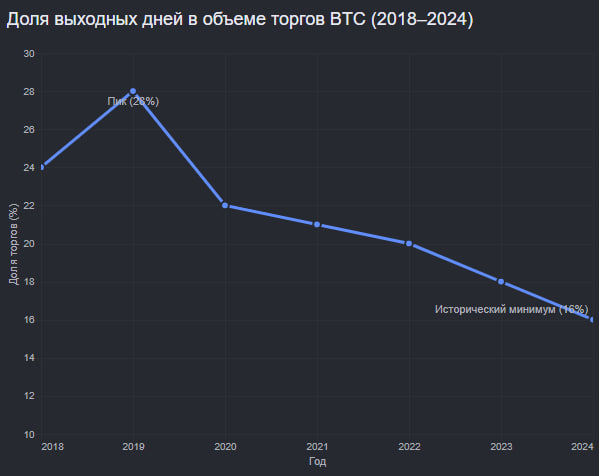
One reason is spot Bitcoin ETFs — exchange-traded funds that hold Bitcoin and let investors buy a share of it through a regular brokerage account. They trade on the stock exchange’s schedule, meaning they sit idle on weekends. Institutionalization has brought a weekly rhythm back into a round-the-clock market. This is an important caveat for the article’s central question: a 24/7 mode creates the possibility of trading nonstop, but doesn’t require anyone to use it. Which makes it all the more notable that traditional exchanges are now moving toward that very possibility themselves.
The Old Exchanges Are Catching Up
The no-pause model has almost already spread beyond crypto. The U.S. stock market is moving toward a mode with almost no closing at all. Nasdaq’s trading week will become continuous starting in 2028: from Sunday evening to Friday evening, with a one-hour break each day from 8:00 PM to 9:00 PM New York time. The exchange itself explains this as a response to global demand — investors in other time zones want to trade during their own daytime hours.
Demand to trade 24 hours a day is still modest, though. Currently, only about 2% of Nasdaq’s volume happens outside standard hours. The market is expanding its hours before mass demand actually exists. Which is why this shift looks less like a technological one, and more like a cultural one taking place inside people’s heads.
The Moscow Exchange is moving in the same direction, but more slowly. Its main session now starts at 9:00 AM. The exchange explains the change by noting that some institutional investors only operate during the main session. Clients in Siberia and the Far East get an extra hour at a time that’s more convenient for them. Weekend trading, meanwhile, runs from 9:50 AM to 7:00 PM. As of September 24, the SPB Exchange also began its main session at 9:00 AM.
The Friday Gap
A gap is the difference between a closing price and the next opening price. If an important event happens over the weekend, a closed market opens with a jump. Traders can’t react instantly as the news comes in. This is called market inefficiency, and some traders build entire trading strategies around it.
Commodity futures for oil and gold still operate on a weekly model with two days off. CME actually defends this boundary: according to Tim McCourt, a senior executive at CME Group, not every market is suited to running 24/7.
In 2026, this boundary was tested in practice. During the conflict between the U.S., Israel, and Iran, commodity markets shut down for the weekend. The decentralized platform Hyperliquid kept trading perpetual oil futures the entire time. During that first shock weekend, data shows, the platform managed to work through roughly 7% of the eventual gap before the benchmark futures contract even opened. In other words, a noticeable part of that price jump happened while the traditional exchange was standing still.
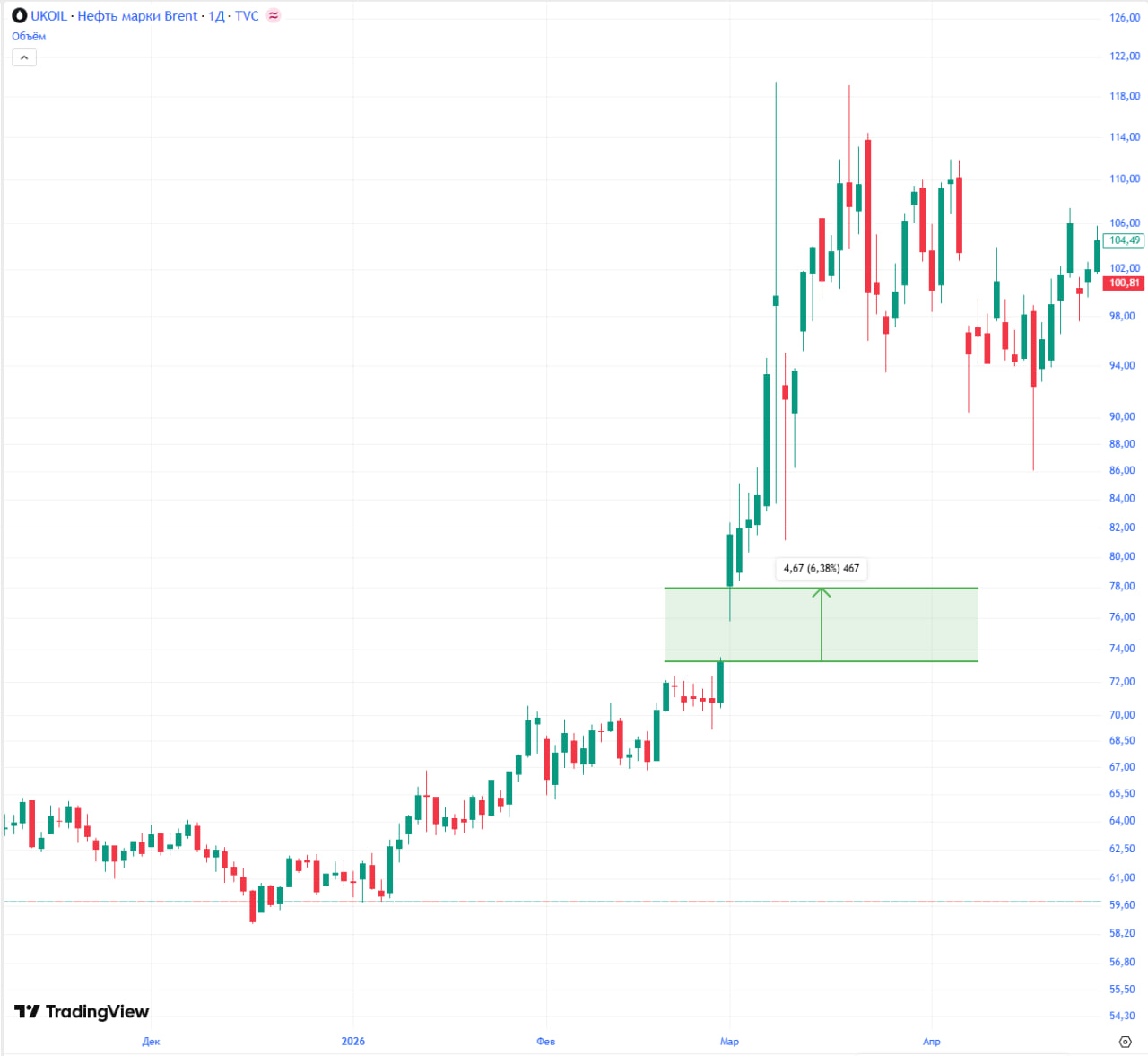
Still, the scale shouldn’t be overstated. Oil liquidity on Hyperliquid was under 1% of CME’s, and trading there is expensive for large participants. This isn’t a replacement for the exchange — it’s a signal: if a pause costs money, someone will find a way to fill it. A similar pressure applies not just to price, but to people’s time as well.
Sleep as the Last Frontier
Long before Nasdaq’s overnight session, Jonathan Crary described the 24/7 regime as a structuring force for all of life, not just trading. In his book 24/7: Late Capitalism and the Ends of Sleep (2013), he writes about an environment where everything is available at any time. According to Crary, such an environment erases the distinction between day and night, weekday and weekend. And along with that distinction, the pauses shared by everyone disappear too.
Crary considers sleep to be the last such pause. In his account, it’s the one stretch of time that can’t be monetized or filled with consumption. That’s why, for him, pressure on sleep is simply the system’s own logic playing out.
Crary writes about late capitalism in general, not about cryptocurrency specifically. Connecting his thesis to a round-the-clock market is our own interpretation. But a similar movement is visible even in places with no Bitcoin and no exchange at all — in ordinary office work. According to Microsoft, the workday is stretching into early mornings and late evenings. Almost 20% of users check email before noon on Saturdays and Sundays. Within the day itself, pauses are also getting fragmented: app notifications interrupt workers every 1.75 minutes — that’s 275 times over an eight-hour day. And yet no one requires anyone to open their email on a Saturday. People do it themselves, and that requires a separate explanation.
No One Is Forcing You
That explanation is offered by Byung-Chul Han. In The Burnout Society (2010), he describes a shift from a disciplinary society, which forbids and compels, to an achievement society. In it, according to Han, a person exploits themselves and calls it freedom. The exchange bell used to be exactly that kind of external prohibition: after it rang, trading simply wasn’t allowed. A round-the-clock market lifts that prohibition and leaves the decision to the individual.
In markets, this decision is complicated by the mechanics of attention. A price that can change at any moment functions as variable reinforcement — the term psychologists use for a reward that arrives unpredictably, which is exactly why it’s so tempting to keep checking the chart, over and over.
There are two serious objections to this picture. The first: flexibility is real. The authors of the Microsoft report note that evening work suits people who are busy with family during the day, global teams, and people whose concentration peaks in the evening. The Moscow Exchange leaned on the same logic when discussing clients in eastern time zones. The report’s own authors pose the question directly: does evening work reflect genuine flexibility, or does it simply stretch an already overloaded day even further?
The second objection concerns Han himself. Critics accuse him of overgeneralizing and weak empirical grounding: his texts read more as diagnostic essays than research, and can’t really serve as proof. To choose between these two responses, it’s worth looking at what’s left of the pause in places where, officially, it no longer exists.
The Right to a Pause
Even a market that almost never closes still keeps an anchoring rhythm. Nasdaq’s classic session, from 9:30 AM to 4:00 PM, will continue to set the main prices, because transparency and price discovery both rely on it. You can trade at almost any time, but the shared moment everyone still orients around remains.
Outside the markets, the pause is starting to be brought back through law. In France and Australia, workers have been given the right to disconnect — the ability not to respond to work messages outside working hours.
In the past, the pause didn’t need protecting, because it was built into the infrastructure itself and the bell rang for everyone at once. Now it has to be defended individually, and the things people lean on to do that are law, habit, or notification settings.
The one-second break between sessions on the Moscow Exchange shows clearly how the pause’s position has changed. It hasn’t disappeared — it’s been compressed down to a single second, and everyone has to divide up the rest of the time on their own. If the market no longer says “that’s enough for today” — who’s going to say it now?